Table of Contents
- What Warehouse Distribution Services Include
- Cross-Docking Services for Small Businesses
- Warehouse Fulfillment Services: End-to-End Order Management
- Bonded Warehousing and Customs Compliance
- Amazon FBA Preparation and E-Commerce Fulfillment
- How to Choose the Right Distribution Provider
- Key Questions to Ask Before Signing Up
- Conclusion
- Frequently Asked Questions
Last Updated: October 12, 2026
What Warehouse Distribution Services Include
Warehouse distribution services combine storage, inventory management, and order fulfillment into a single operation. These services handle everything from receiving goods at the dock to shipping final orders to customers or retail locations.
At GTC Logistics, we manage the full spectrum of warehouse distribution services. This includes receiving inventory, storing products in climate-controlled or standard conditions, picking and packing orders, and coordinating final delivery. Our 30,000 square foot facility in Saint-Laurent gives businesses access to professional-grade distribution without the overhead of running their own warehouse.
The core components of warehouse distribution services are:
- Receiving and intake: Products arrive, get inspected, and enter the inventory system
- Storage and organization: Items are shelved, labeled, and tracked in real-time
- Order fulfillment: Customer or wholesale orders are picked, packed, and prepared for shipment
- Shipping coordination: Orders move to carriers or directly to end customers
- Inventory visibility: Real-time tracking powered by systems like Oracle NetSuite
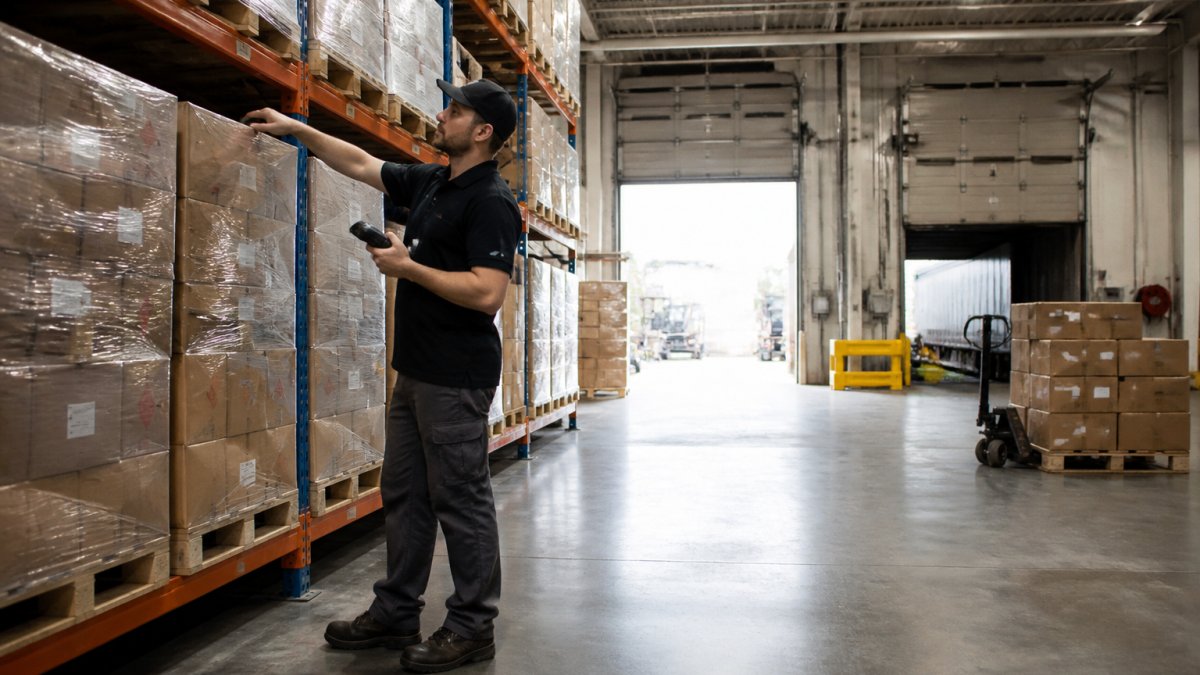
Most businesses choose warehouse distribution services to eliminate the fixed costs of owning a facility while gaining access to professional fulfillment operations. This approach works especially well for e-commerce brands, importers managing seasonal inventory, and manufacturers needing local distribution points.
Cross-Docking Services for Small Businesses
Cross-docking services move goods directly from inbound shipments to outbound trucks with minimal storage time. Instead of holding inventory for days or weeks, products arrive, get sorted by destination, and ship out the same day or next morning.
For small businesses, cross-docking services reduce storage costs and accelerate delivery timelines. A retailer importing containers from Asia can unload inventory, sort by store location, and have shipments ready for regional distribution within hours rather than days.
GTC Logistics offers cross-docking services available until 9:00 PM, giving businesses flexibility to manage high-volume shipments or time-sensitive orders. This service pairs especially well with ocean shipping coordination, goods arrive at the port, move directly to our facility, get cross-docked by destination, and ship to retail partners or fulfillment centers.
The advantages of cross-docking for small operations include:
- Reduced warehouse storage fees (inventory doesn't sit idle)
- Faster delivery to end customers or retail locations
- Lower handling costs compared to traditional warehousing
- Better cash flow (inventory moves quickly)
- Simplified logistics for businesses with predictable seasonal patterns
Small businesses often hesitate about warehouse distribution services, assuming they're designed only for large-scale operations. Cross-docking proves otherwise, companies moving 200 units per month benefit as much as those moving 2,000. The service scales to match your volume.
Warehouse Fulfillment Services: End-to-End Order Management
Warehouse fulfillment services handle the complete order lifecycle: receiving customer orders, picking items from inventory, packing them correctly, and preparing shipments for carrier pickup. This differs from basic storage, fulfillment is an active operation that touches every order.
End-to-end fulfillment services include order management integration with your e-commerce platform, real-time inventory sync, quality control checks, and shipping label generation. When a customer places an order on your website, the fulfillment provider picks that item, verifies it matches the order, packs it with care, and hands it to a carrier, all without your team touching the product.
For e-commerce brands, warehouse fulfillment services eliminate the need for in-house packing operations. A brand selling 500 orders per month can redirect staff from warehouse work to marketing, customer service, and product development. The fulfillment provider becomes an extension of your operations.
GTC Logistics manages warehouse fulfillment services powered by Oracle NetSuite, giving you instant access to inventory data and order status. This visibility matters when customers ask where their shipment is or when you need to adjust stock levels. Real-time tracking prevents overselling and reduces fulfillment delays.
Key metrics for evaluating warehouse fulfillment services:
- Order accuracy: Percentage of orders picked and packed correctly on first attempt
- Turnaround time: Hours from order receipt to shipment handoff
- Inventory visibility: Real-time sync between your system and the warehouse
- Damage rates: Percentage of shipments arriving without damage
- Scalability: Ability to handle seasonal volume spikes without service degradation
Bonded Warehousing and Customs Compliance
Bonded warehousing allows importers to store goods in Canada without paying duty or sales tax until the products are released for domestic use or re-exported. This is critical for businesses managing international inventory or holding goods temporarily before final distribution.
A bonded warehouse is licensed by the Canada Border Services Agency (CBSA) and operates under strict compliance rules. Goods stored in a bonded facility remain under customs supervision.
For importers bringing containers from Asia quarterly, bonded warehousing eliminates the need to pay duty upfront on inventory sitting in storage. This improves cash flow significantly, you only pay duties when goods actually enter the Canadian market for sale.
GTC Logistics holds CBSA bonded warehouse certification and manages the compliance requirements that come with it. Our team handles import documentation, maintains customs records, and coordinates with CBSA on inventory releases.
Common bonded warehousing scenarios:
- Seasonal importers: Hold inventory duty-free until the selling season begins
- Contract manufacturers: Store raw materials or finished goods before final delivery
- Distribution hubs: Manage multi-country inventory in one bonded location
- Re-exporters: Hold goods temporarily before shipping to international customers
Bonded warehousing requires strict record-keeping and regular CBSA audits. Working with a certified provider removes the administrative burden and reduces the risk of compliance violations that can trigger holds or penalties.
Amazon FBA Preparation and E-Commerce Fulfillment
Amazon FBA (Fulfillment by Amazon) requires products to arrive at Amazon warehouses in specific packaging, labeling, and condition. Many e-commerce brands handle FBA preparation in-house, but this becomes a bottleneck as volume grows. Professional FBA preparation services manage the entire process.
FBA preparation includes receiving inventory, inspecting for damage, applying Amazon barcodes and labels, packing products into Amazon-compliant cases, and arranging shipment to the fulfillment center. Amazon's requirements are detailed, incorrect labeling or packaging can result in shipments being rejected or held.
GTC Logistics handles Amazon FBA preparation as part of our end-to-end fulfillment services. We ensure your products arrive at Amazon warehouses ready for immediate acceptance, reducing delays and avoiding the frustration of rejected shipments. Our team stays current on Amazon's changing requirements, so your inventory meets standards every time.
For e-commerce brands using Amazon as a primary sales channel, professional FBA preparation accelerates growth. You can focus on marketing and customer acquisition while we manage the logistics complexity.
The FBA preparation process includes:
- Receiving and quality inspection
- Amazon barcode application and verification
- Case labeling with required information
- Packing into Amazon-compliant boxes
- Freight arrangement to designated fulfillment centers
- Documentation and shipment tracking
Brands shipping to multiple Amazon fulfillment centers benefit from our coordination. We consolidate shipments where possible, reducing freight costs while meeting Amazon's timing requirements.
How to Choose the Right Distribution Provider
Selecting a warehouse distribution services provider is one of the most important operational decisions a growing business makes. The wrong choice creates bottlenecks, increases costs, and damages customer relationships when orders ship late or arrive damaged.
Start by defining what you actually need. A business doing 100 orders per month has different requirements than one doing 10,000.
Next, evaluate facility capabilities. Does the provider have enough dock doors to handle your inbound shipments? Is the facility climate-controlled if your products require it?
Technology integration is critical. Your warehouse distribution services provider should connect directly to your e-commerce platform, accounting system, and shipping software. Manual data entry between systems creates errors and delays.
Cost structure matters significantly. Some providers charge per unit picked and packed. Others charge per order. Some include receiving and storage in a monthly fee.
Finally, evaluate customer service and responsiveness. You'll need to communicate frequently about inventory adjustments, special packaging requests, and shipping exceptions. Call the provider and ask questions. Notice how quickly they respond. Talk to existing customers if possible.
Key Questions to Ask Before Signing Up
Before committing to a warehouse distribution services provider, ask these questions to avoid costly mistakes.
Operations and Capability:
- What is your current warehouse use rate, and how quickly can you accommodate additional volume?
- Do you handle international shipments, or only domestic orders?
- What happens if I need to scale from 500 to 5,000 units per month, can you absorb that without service degradation?
- Do you offer climate-controlled storage, and what temperature ranges do you maintain?
- How do you handle fragile items, hazardous goods, or special packaging requirements?
Technology and Integration:
- What inventory management systems do you integrate with? (Ask specifically about your platform)
- How real-time is inventory visibility, can I see stock levels updated within the hour?
- What happens if your system goes down, do you have backup procedures?
- Can you generate shipping labels in multiple formats, or are you limited to one carrier?
Compliance and Documentation:
- If I import bonded goods, can you manage CBSA compliance and documentation end-to-end?
- How do you handle import records and customs declarations?
- What insurance do you carry, and what's covered if inventory is damaged or lost?
- How often does CBSA audit your facility, and what's your compliance history?
Costs and Terms:
- What are your fees for receiving, storage, picking, packing, and shipping label generation?
- Are there surcharges for slow-moving inventory, special handling, or returns?
- What's your minimum monthly commitment, and what happens if I don't hit it?
- How much notice do I need to give if I want to move inventory elsewhere?
Customer Service:
- Who is my primary contact, and what are their hours of availability?
- How quickly do you respond to questions about inventory discrepancies or shipping issues?
- Can you provide references from customers similar to my business size and industry?
Conclusion
Warehouse distribution services consolidate storage, fulfillment, and shipping into a single operation, eliminating the complexity and cost of managing multiple vendors. Whether you're an e-commerce brand preparing inventory for Amazon FBA, an importer managing bonded goods from Asia, or a retailer coordinating cross-docking shipments, professional warehouse distribution services accelerate your growth and reduce operational headaches.
The right provider becomes a strategic partner, someone who understands your business, scales with your growth, and handles the logistics complexity so you can focus on sales and customer relationships. GTC Logistics delivers exactly that. Our CBSA bonded warehouse, Oracle NetSuite integration, and end-to-end fulfillment services are built for businesses that demand reliable, cost-efficient distribution. RATE REQUEST to discuss how we can optimize your supply chain.
Service Type | Best For | Key Advantage |
|---|---|---|
Cross-docking | Seasonal inventory, fast distribution | Minimal storage costs, rapid delivery |
Bonded warehousing | International imports, duty deferral | Cash flow improvement, compliance management |
FBA preparation | Amazon sellers | Direct fulfillment center acceptance |
End-to-end fulfillment | E-commerce brands | Real-time inventory visibility, order accuracy |
Additional Resources:
Learn more about optimizing your warehouse distribution operations. For guidance on CBSA compliance requirements, visit Canada Border Services Agency official documentation. To understand inventory management best practices, consult Industry logistics standards from the Canadian Logistics Association. For e-commerce fulfillment benchmarks, reference Shopify's fulfillment guide for growing merchants.
Frequently Asked Questions
What is the difference between warehousing and distribution?
Warehousing focuses on storing inventory securely and managing stock levels, while distribution involves the movement and delivery of goods to customers or retail locations. Distribution services typically include picking, packing, and shipping, whereas warehousing emphasizes storage capacity and inventory organization. Many warehouse distribution services combine both functions to provide end-to-end supply chain solutions.
How does cross-docking work for small businesses?
Cross-docking allows small businesses to receive shipments, sort them quickly, and dispatch them to customers without prolonged storage. Goods arrive at the facility, are organized by destination, and leave within hours. This reduces storage costs and accelerates delivery times, making it ideal for businesses with high inventory turnover or seasonal peaks. Extended hours (such as service until 9:00 PM) help accommodate shipping schedules.
When should a business use a bonded warehouse?
Bonded warehouses are essential for businesses importing goods that have not yet cleared customs or paid duties. They allow you to store inventory under customs supervision while managing import documentation and compliance. This is particularly valuable for companies importing containers from Asia or managing international supply chains. CBSA bonded warehouse services handle compliance documentation, reducing the risk of customs delays or holds.
Can a warehouse provider prepare orders for Amazon FBA?
Yes, many warehouse distribution providers offer Amazon FBA preparation services. This includes receiving your inventory, applying Amazon labels, packing items to Amazon specifications, and arranging shipment to Amazon fulfillment centers. Providers with experience in FBA preparation understand labeling requirements, barcode standards, and Amazon's receiving protocols, ensuring smooth transitions to FBA.
What should I ask a warehouse provider before signing up?
Ask about facility capacity and dock availability, integration with your current systems (such as Shopify or NetSuite), specific services offered (fulfillment, cross-docking, bonded storage), turnaround times for order processing, how they handle inventory visibility and reporting, experience with your industry or product type, and flexibility for scaling or changing service levels. Request references from current clients similar to your business size.