


Table of Contents
- What Cross-Docking Services Are and How They Work
- Understanding the Cross-Docking Process
- Cross-Docking vs Warehousing: Key Differences
- Cross-Docking Requirements for Your Shipments
- Cross-Docking for E-Commerce: Accelerating Order Fulfillment
- Reducing Storage Time and Warehouse Delays
- Selecting a Cross-Docking Provider
- Frequently Asked Questions
Last Updated: October 18, 2026
What Cross-Docking Services Are and How They Work
Cross-docking services are a logistics strategy that moves freight directly from inbound transportation to outbound transportation with minimal storage time in between. Instead of keeping goods in a warehouse for days or weeks, cross-docking transfers shipments through a distribution facility in hours. This approach reduces inventory holding costs and accelerates product delivery to customers.
The core idea is straightforward: freight arrives, gets sorted and consolidated or deconsolidated as needed, then leaves immediately for its final destination. Think of the facility as a sorting hub rather than a storage warehouse. Goods pass through dock doors, not storage racks.
At GTC Logistics, we manage this process using real-time inventory tracking powered by Oracle NetSuite. This visibility lets shippers know exactly where their freight is at every stage, which matters when speed is the competitive advantage.
Understanding the Cross-Docking Process
The cross-docking process follows a predictable workflow designed to minimize dwell time. Each step builds on the previous one, and timing matters. A delay at any stage compounds through the rest of the operation.
Receiving and Sorting Inbound Freight
Freight arrives at the dock and is immediately unloaded and inspected. Staff verify that quantities match the shipping documents and that goods are undamaged. This step typically takes 1-2 hours depending on shipment size.
Once verified, freight moves to a sorting area. Items are categorized by destination, customer, or product type. This organization is critical; poor sorting creates bottlenecks downstream.
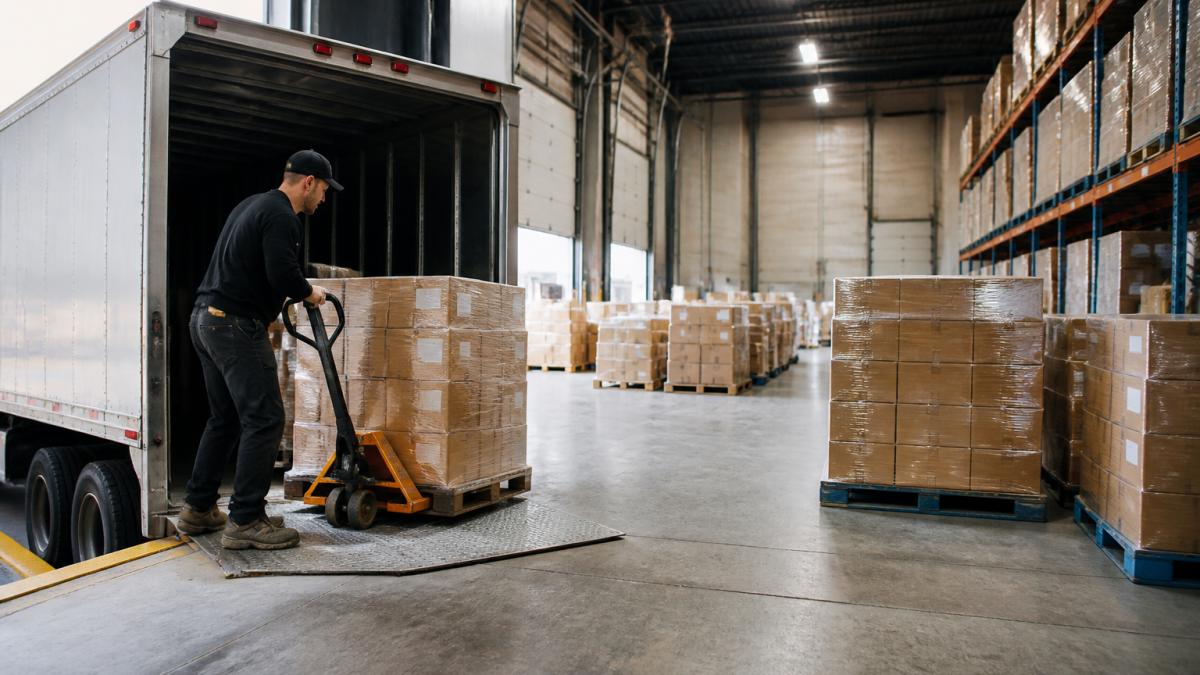
Receiving staff use barcode scanning to log each item into the system. Real-time tracking begins here. Customers and logistics coordinators can see their shipment status immediately.
Consolidation and Deconsolidation
Consolidation combines multiple small shipments into a single truckload. This is where cross-docking delivers real savings. Instead of each customer paying for a partial truck, their freight shares transportation costs with others heading the same direction.
Deconsolidation does the opposite: it breaks a large inbound shipment into smaller outbound loads. A container from Asia might hold 500 units destined for 20 different retailers. The facility separates these into individual store shipments.
Both processes happen in the same facility, often simultaneously. The dock becomes a choreography of incoming and outgoing freight moving in different directions.
Transferring to Outbound Transportation
Once consolidation or deconsolidation is complete, freight is staged at outbound dock doors. Trucks arrive on schedule, and loading begins immediately. The entire transfer process takes 2-4 hours for most shipments.
Drivers receive updated manifests showing exactly what's on their truck and the delivery sequence. This coordination prevents mix-ups and ensures customers receive the right goods on time.
GTC Logistics coordinates this handoff with carrier partners. We confirm truck availability, verify load configurations, and track departure to ensure on-time pickup.
Cross-Docking vs Warehousing: Key Differences
Cross-docking services and traditional warehousing serve different purposes, and the choice depends on your supply chain needs.
Warehousing stores goods for days, weeks, or months. Inventory sits on shelves, taking up space and tying up capital. You pay for storage by the day and the pallet. This model works when you need to hold stock for seasonal demand or buffer against supply disruptions.
Cross-docking moves goods through in hours. You pay for the handling and transfer, not for storage duration. This model works when speed matters more than inventory buffering. E-commerce fulfillment, retail replenishment, and just-in-time supply chains all favor cross-docking.
The cost structure differs too. Warehousing charges are predictable: rent per square foot, handling fees, and storage duration. Cross-docking charges depend on throughput: how many pallets move through per day. High-volume operations see lower per-unit costs.
Cross-Docking Requirements for Your Shipments
Not every shipment is suitable for cross-docking. Before you book a dock slot, run your freight through a practical checklist. The goal is to confirm your shipment can move through the facility in hours, not days, without special handling that slows the whole operation.
Shipment Eligibility Checklist
Use this checklist to assess whether your freight is cross-dock ready:
- Palletization and dimensions: Most facilities prefer standard 48 x 40 inch pallets. Confirm maximum pallet height (often 60 inches or less) and weight limits per pallet and per shipment. Oversized or non-palletized freight may require special handling and could incur surcharges.
- Weight and piece count: Provide accurate total weight and piece count. Under-declaring weight is a common cause of dock delays and re-handling.
- Labeling: Each pallet or carton should have a clear, scannable label with destination, purchase order number, and SKU details. Inbound labels must match the advance shipping notice (ASN) or manifest.
- Paperwork: Prepare a bill of lading (BOL), packing list, and commercial invoice for imports. For Canada-bound freight, ensure customs documentation is complete before arrival to avoid holds.
- Equipment needs: Flag any requirement for a liftgate, pallet jack, or forklift. If your carrier cannot provide the right equipment at the dock, the appointment may need to be rescheduled.
- Appointment requirements: Many cross-docks operate by appointment. Confirm whether your carrier must book a receiving window and whether late arrivals are accepted.
- Freight type: Standard dry goods move fastest. Fragile, high-value, hazardous, or temperature-sensitive goods need dedicated handling and may not be accepted at every facility.
Freight Types and Special Handling
Standard dry goods, retail replenishment, and e-commerce inventory are the best fit for cross-docking. Perishables can work if the facility has temperature-controlled lanes and fast turnaround, but confirm this before booking. Hazardous materials require proper classification, documentation, and facility approval. High-value electronics may need secured staging and additional chain-of-custody steps.
Documentation and Compliance
Accurate documentation prevents delays. Shipping labels, manifests, and customs paperwork must be complete and correct. For imports into Canada, the Canada Border Services Agency (CBSA) requires specific declarations; missing or incorrect information can hold up a shipment for hours or days. A bonded facility can help manage customs clearance without tying up your goods.
Cross-Docking for E-Commerce: Accelerating Order Fulfillment
E-commerce retailers benefit from cross-docking because speed drives customer satisfaction. Faster delivery means happier customers and fewer returns.
Cross-docking shortens the fulfillment cycle. Inventory moves from your supplier directly to customers without sitting in a warehouse. This is especially valuable for Amazon FBA preparation, where inventory must reach Amazon warehouses quickly to avoid stockouts.
The process works like this: your supplier ships goods to a cross-dock facility. Staff unload, verify, and repack into Amazon-compliant boxes or pallets. Within 24 hours, freight moves to Amazon's inbound receiving location. Your products are available for sale faster.
Real-time inventory visibility matters here too. You can see exactly how many units arrived, how many are in process, and when they shipped to Amazon. This prevents the guessing game that plagues many e-commerce operations.
GTC Logistics handles this end-to-end. We coordinate ocean shipping from suppliers, manage container destuffing at our facility, prepare goods for Amazon FBA, and arrange final-mile delivery to Amazon warehouses.
Reducing Storage Time and Warehouse Delays
Storage time is money. Every extra day goods sit in a warehouse costs you in rent, handling, and tied-up capital. Cross-docking cuts storage time dramatically.
Traditional warehousing might hold inventory for 5-10 days before it ships out. Cross-docking reduces this to 12-24 hours. That's a 75% reduction in dwell time.
The impact compounds. Lower storage time means lower overall logistics costs. Faster inventory turnover means you can operate with smaller safety stock. Capital freed up from inventory can go toward growth.
Warehouse delays happen when receiving backlogs, picking errors, or carrier delays pile up. Cross-docking eliminates most of these because the facility is designed for throughput, not storage. Goods move in and out on schedule.
This is especially valuable for seasonal products or time-sensitive shipments. Delay a seasonal item by a week and you miss the selling window entirely. Cross-docking ensures goods reach customers when demand peaks.
Selecting a Cross-Docking Provider
Choosing the right provider determines whether cross-docking actually saves you money and time. Use a structured evaluation rather than a single site visit.
How to Arrange Cross-Docking: Step by Step
- Request a quote. Provide shipment details: origin, destination, pallet count, weight, dimensions, freight type, and expected arrival and departure windows. Ask what is included and what triggers extra charges.
- Confirm eligibility and requirements. Share your packing list and labeling standards. Ask whether the facility can handle your freight type and whether any special equipment is needed.
- Book a dock slot. Confirm receiving hours, appointment requirements, and cutoff times for same-day outbound. Ask how late arrivals are handled.
- Coordinate arrival. Send the advance shipping notice (ASN) and bill of lading ahead of time. Confirm the carrier, trailer number, and expected arrival time.
- Confirm outbound dispatch. Verify the outbound carrier, pickup window, and delivery sequence. Ask for a confirmation once freight is loaded and departed.
Quote Factors and Cost Drivers
Cross-docking pricing is typically built from several components. Ask your provider to break these out so you can compare quotes fairly:
- Pallet count and handling: Per-pallet receiving and handling fees are common. Volume discounts may apply.
- Dwell time: Free time is often limited (for example, 24 hours). Storage beyond that may be charged per pallet per day.
- Special equipment: Liftgate, forklift, or pallet jack requirements can add handling fees.
- Appointment and after-hours fees: Outside standard receiving hours or unscheduled arrivals may incur surcharges.
- Delivery distance: Final-mile or linehaul charges depend on destination and lane.
- Documentation and customs: Bonded storage or customs coordination may be priced separately.
Frequently Asked Questions
What is cross-docking in logistics?
Cross-docking is a logistics practice where inbound shipments are received, sorted, and quickly transferred to outbound transportation with minimal storage time. Goods move directly from inbound dock to outbound dock, reducing the need for long-term warehouse storage. This approach cuts handling costs and accelerates delivery, making it ideal for time-sensitive freight and e-commerce fulfillment.
How does the cross-docking process differ from traditional warehousing?
In traditional warehousing, inventory sits for days or weeks while awaiting orders or distribution. Cross-docking minimizes storage by moving goods through the facility within hours. The key difference: warehousing prioritizes inventory management and long-term holding, while cross-docking prioritizes speed and freight consolidation. Choose warehousing for stock management; choose cross-docking for rapid freight movement.
What types of shipments are suitable for cross-docking?
Cross-docking works best for full truckloads, less-than-truckload (LTL) freight, consolidated shipments, and time-sensitive goods. E-commerce orders, perishables with short shelf lives, and freight destined for Amazon FBA preparation are strong candidates. Goods requiring long-term inventory management or special storage conditions (temperature control, hazardous handling) are better suited to traditional warehousing.
How long does freight typically stay at a cross-dock facility?
Freight at a cross-dock typically stays for 4 to 48 hours, depending on shipment volume, consolidation needs, and outbound transportation schedules. Some facilities offer extended hours (such as cross-docking services available until 9:00 PM) to expedite transfers. The goal is rapid movement: the shorter the dwell time, the greater the cost savings and delivery speed advantage.


